We Keep Teaching Coaches How to Coach — But Not How to Survive
We Keep Teaching Coaches How to Coach — But Not How to Survive
For the last 15 years, my work has largely centered around one thing:
Helping people see the gaps.
Especially the ones hiding in plain sight.
When I first started speaking about shift workers and workforce wellness, those conversations were not happening very often. Most wellness programs were designed around traditional schedules, traditional lifestyles, and traditional expectations.
But millions of people did not fit that mold.
Manufacturing employees. Healthcare workers. Truck drivers. Emergency responders. Night shift nurses. Parents juggling rotating schedules. People trying to hold together health, work, family, and exhaustion all at once.
For years, wellness often treated those realities like exceptions instead of everyday life.
And over time, I watched something important happen.
Organizations began paying attention. Health coaches started asking better questions. The industry slowly started recognizing that health has to fit real life — not the other way around.
That progress matters.
The National Board for Health & Wellness Coaching and many dedicated professionals have worked incredibly hard to bring credibility, structure, education standards, and visibility to this profession. Universities, educators, researchers, mentors, and advocates have all helped move health coaching from a misunderstood role into something more respected and recognized.
That work opened doors.
But lately, I have found myself noticing another gap.
Not with clients this time.
With coaches themselves.
The Conversation We Don’t Have Enough
Behind the growth of the wellness industry, I also see a quieter reality:
A lot of incredibly talented health and wellness professionals are struggling to stay in the field.
Not because they are bad coaches. Not because they lack passion. Not because they do not care deeply about helping people.
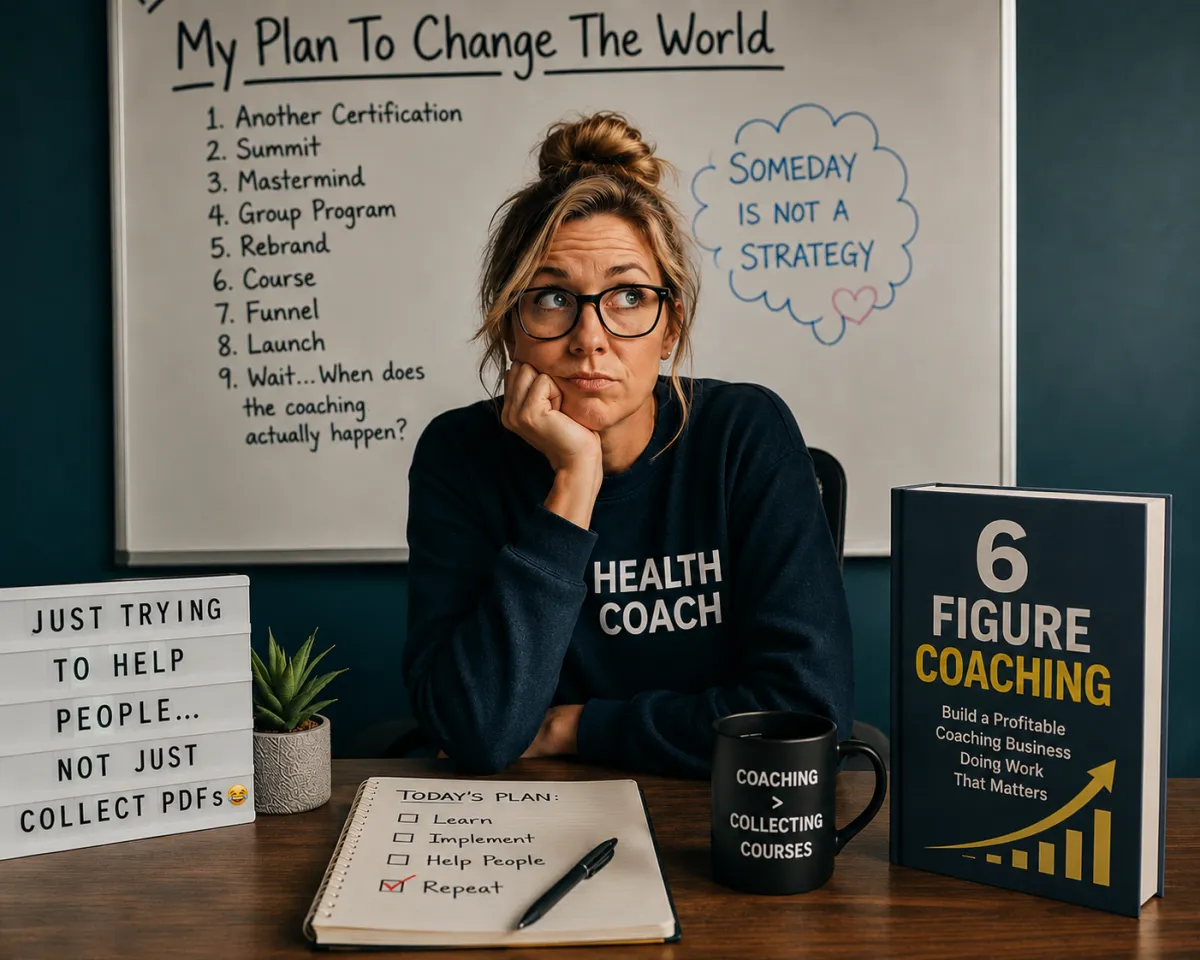
Many are struggling because we built an industry that teaches people how to coach… without always teaching them how to build sustainable careers around that skill.
We tell coaches to:
Change lives
Follow their passion
Start a business
Build a brand
Create impact
Invest in themselves
But many graduate into a reality filled with:
Inconsistent income
Marketing overwhelm
Expensive software subscriptions
Fragmented systems
Pressure to constantly create content
Contract work with little stability
Burnout from trying to do everything alone
Job postings asking for years of experience before someone can even get in the door
And many quietly leave the profession wondering if they failed.
Honestly, I do not think the problem is a lack of talent.
I think many of the systems surrounding the wellness industry were never truly built to support sustainable growth for the people inside it.
The Hidden Operational Problem in Wellness
Over the years, I have worked across coaching, corporate wellness, workforce wellness, education, speaking, and behavior change.
And one pattern keeps showing up:
Most people are not drowning because they are incapable.
They are drowning because they need to be all the things to run a business.
Health coaches are often expected to simultaneously become:
Coaches
Marketers
Content creators
Sales teams
Tech support
Administrators
Social media managers
Funnel builders
Operations managers
All while still trying to help people well.
That creates a tremendous amount of invisible pressure.
Especially in an industry built around care.
The irony is that many wellness professionals spend their days helping others reduce stress while quietly operating inside systems that create enormous stress for themselves.
And I think we need to talk about that more honestly.
Sometimes the Next Problem You’re Meant to Solve Looks Different
For a long time, my focus was helping organizations and coaches better understand shift workers and workforce wellness.
That work still matters deeply to me.
But over time, my perspective started expanding beyond behavior change itself and into the operational infrastructure surrounding the people doing the work.
Because eventually I realized:
Sustainable change is not just about motivation.
It is also about systems.
Systems either support people… or exhaust them. (I wrote more about this here)
Technology can create clarity… or overwhelm.
Processes can create freedom… or chaos.
And increasingly, I found myself becoming interested in a different kind of question:
What happens when the people trying to improve health are operating inside unsustainable systems themselves?
That question is part of what eventually led me deeper into operations, systems thinking, workflow strategy, and ethical AI.
Not because I stopped believing in health coaching.
But because I still do.
Probably more than ever.
Building Sustainable Businesses in Wellness
The wellness industry does not just need passionate professionals.
It needs sustainable pathways.
It needs:
Better operational support
Smarter systems
Clearer workflows
Realistic business education
Thoughtful technology implementation
Human-centered automation
Infrastructure that helps people grow without burning out
Because sustainable businesses are not built on motivation alone.
They are built on clarity.
And clarity is often the missing piece.
That realization has shaped much of the work I am doing now through Undoxa.
Not from the perspective of “more tech for the sake of tech.”
But from the belief that systems should support people — not fight against them.
That growth should feel sustainable.
That operations matter.
And that the future of wellness should not only focus on helping clients thrive, but also helping the professionals behind the work build businesses and careers they can realistically sustain.
Final Thoughts
I do not have every answer.
But I do think the wellness industry is entering an important moment.
One where we have an opportunity to move beyond simply teaching coaching skills and begin thinking more deeply about sustainability, operations, infrastructure, and long-term support for the people doing this work.
Because if the professionals helping others stay healthy are constantly overwhelmed trying to survive themselves, eventually the entire field feels it.
And maybe that is the next gap we need to pay attention to.